
Tile adhesive and natural stone adhesive
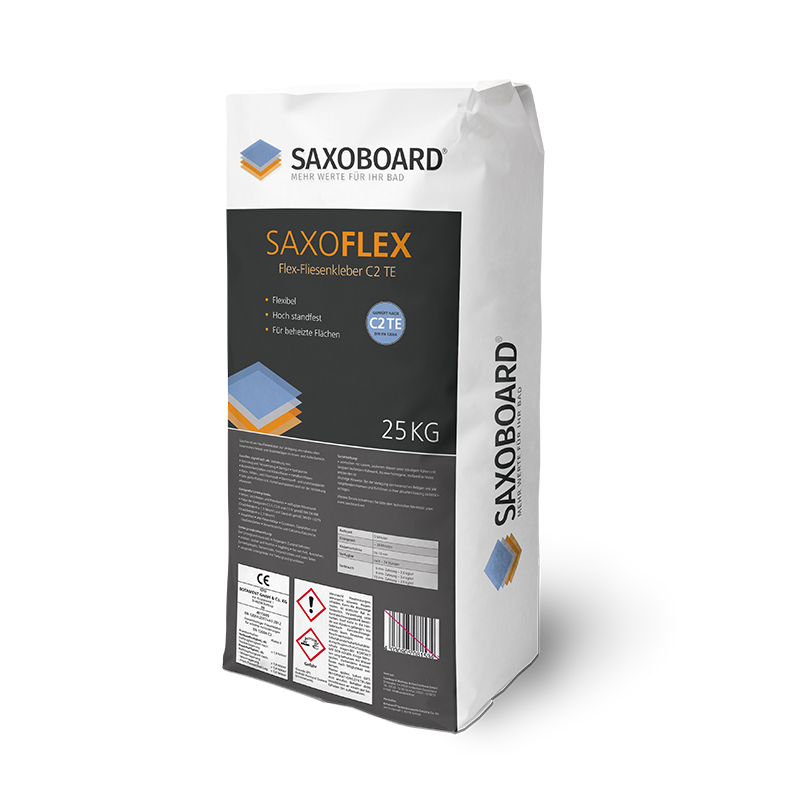
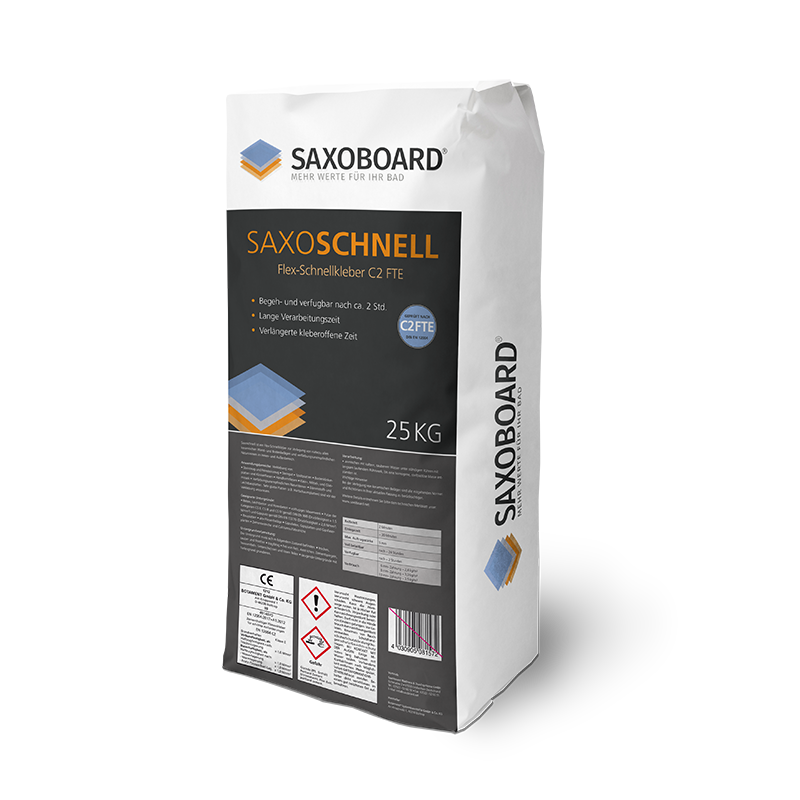
Tile adhesive for indoor and outdoor use
When choosing floor and/or wall tiles, the choice of product is essentially determined by personal taste. This is not the case with tile adhesive: here, the product properties determine suitability.
What to look out for in tile adhesive?
Moisture: Damp rooms such as kitchens or bathrooms require a special primer that acts as a vapour barrier and can protect the tiles from damage caused by moisture.
Substrate: If the substrate is a material that absorbs moisture, e.g. wood or concrete, a different tile adhesive is required than for non-absorbent surfaces. The same applies to rough or smooth surfaces. Damage to the substrate may require a special primer resin to level out any unevenness.
Tile material: tiles can be made of ceramic, concrete, natural or fine stone. The different materials should be taken into account when choosing the tile adhesive. It is therefore advisable to determine the adhesive only after purchasing the tiles.
Laying: A distinction is made between thin-bed and thick-bed laying methods. With the thin-bed method, only a thin layer of tile adhesive is applied. This requires a surface without unevenness. If the adhesive is suitable for thick-bed laying, unevenness can be levelled out.
Temperature resistance: If underfloor heating is present, the adhesive must not lose its strength when heated. Conversely, this applies when tiling outdoors: In this case, the adhesive must also be able to withstand sub-zero temperatures in winter.
Differences and suitability of flexible adhesive, cementitious adhesive & dispersion adhesive
A wide range of requirements for the primer ensure that there is a wide range of tile adhesives. This naturally complicates the choice of product.
Flexible adhesive
Flex adhesive (also known as Flex tile adhesive) best fulfils the requirements of an all-round product. It is characterised by high flexibility and good suitability for very smooth substrates. Plastic is added to flexible adhesives, which makes them particularly flexible. In this way, they offer good protection against overstressing caused by temperature fluctuations or stresses caused by foot traffic.
Dispersion adhesive
The so-called dispersion adhesive is based on plastic and requires no mixing. Due to its high strength, it is also suitable for smooth surfaces, although it takes a little longer to harden. However, the biggest disadvantage of dispersion adhesive is that it is not frost-resistant . For this reason, it isnot suitable for outdoor use.
Cement adhesive
Cement adhesives, also known as adhesive mortar, only harden when water is added . However, it then hardens quite quickly - in some products within just a few hours. Cement adhesives are well suited to absorbent substrates such as concrete, plaster or screed.
Natural stone adhesive
Natural stone tiles are susceptible to discolouration, which requires a special adhesive. These natural stone adhesives are basically cement-based mortars that bind water very quickly when mixed. As a result, no mortar components migrate into the natural stone. In addition, natural stone adhesives are usually white in colour so as not to affect the appearance of the stone.
Reaction resin adhesives
Reaction resin adhesives are a type of speciality product. These consist of two components: A synthetic resin (usually epoxy resin) and a hardener. If both components are mixed, they harden very quickly. They are particularly suitable for large and/or difficult surfaces such as metal or glass. As tiles are rarely laid on these materials in the home, they are rarely found there. They are more likely to be used in commercial kitchens or laboratories.
Gluing over old tiles
Existing tiles are often pasted over, particularly during renovation work. This saves time-consuming and costly dismantling. Before old tiles can be bonded over, they must first be checked for cracks and holes, re-grouted if necessary and cleaned.
When gluing tile to tile, the substrate is usually very smooth and non-absorbent. A flexible or dispersion adhesive is recommended here. Uneven surfaces that cannot be levelled by simply grouting sometimes also require a primer resin.